
Scotland likes to think of itself as an ambitious, modern country. But when it comes to artificial intelligence, ambition must mean more than publishing strategies, holding conferences and issuing carefully worded statements.
It must mean giving ordinary people the skills and tools to participate.
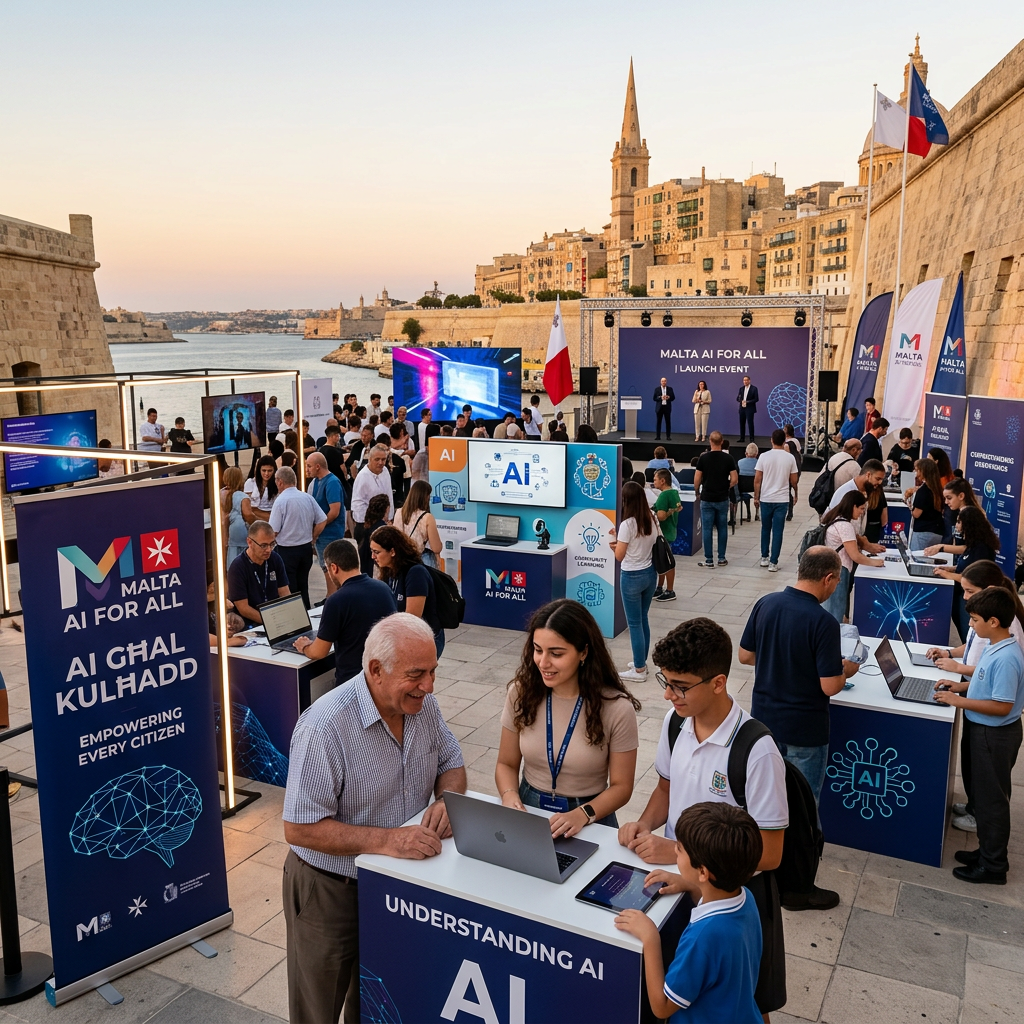
Malta has already shown what that can look like. Its AI for All initiative offers citizens and residents free training in artificial intelligence, covering practical use, misinformation, privacy and responsible decision-making. Eligible participants who complete the course can also receive access to a premium AI service for a year.
It is a simple but powerful political idea: educate people, give them access and make sure the benefits of a major technological shift are not restricted to large companies and wealthy professionals.
John Swinney should do the same in Scotland.
The First Minister often speaks about economic growth, public-service reform, education and reducing inequality. A national AI-literacy programme could support every one of those priorities.
Artificial intelligence is already changing workplaces, schools, universities and small businesses. It can help people draft documents, analyse information, learn new skills and reduce repetitive administrative work. But access is deeply unequal.
Some people are already using advanced AI tools every day. Others have barely encountered them, do not know which services are trustworthy or cannot justify paying subscription fees.
Without government action, that divide will grow.
The people who benefit most from AI will be those who already have money, confidence, strong digital skills and access to professional support. Those who are older, unemployed, on low incomes or living in communities with weaker digital infrastructure risk being left behind yet again.
Scotland has seen this pattern before. New technologies arrive promising opportunity, but the benefits are captured unevenly while government responds too slowly.
Swinney has an opportunity to avoid repeating that mistake.
An AI for All Scotland programme could offer free online training through colleges, universities and public libraries. It could teach people how to use AI productively while also warning them about false information, bias, privacy risks and the danger of treating automated answers as unquestionable facts.
After completing the training, participants could receive temporary access to approved AI tools or further accredited learning.
This should not be limited to central-belt professionals. It should reach school leavers, carers, small-business owners, public-sector workers, people seeking employment and residents of rural and island communities.
Libraries and community centres could provide face-to-face support for people who are not confident online. Courses could be made accessible to disabled users and offered in English, Gaelic and other widely used community languages.
There would be legitimate questions about cost and commercial partnerships. Any agreement with an AI company would need strong rules on data protection, procurement, transparency and value for money.
The Scottish Government should also avoid turning the programme into an advertisement for a single technology provider. Citizens should learn broad AI skills that can be applied across different systems.
But these are design challenges, not reasons for inaction.
The greater risk is that Scotland spends the next few years discussing responsible AI while thousands of workers and small businesses fall further behind.
A national programme would also force the government to confront the changes AI will bring to education and employment. Schools cannot simply ban the technology and pretend pupils will not use it. Employers cannot introduce automated systems without training staff or considering accountability.
People need to understand when AI is useful, when it is unreliable and when human judgement must remain decisive.
That is a public-policy responsibility.
Malta’s initiative is politically attractive because it treats technological change as something that should be shared. It does not assume that the market will distribute opportunity fairly. It recognises that governments have a role in ensuring citizens are prepared.
That principle should appeal to a Scottish Government that claims to care about social justice.
He should set a clear target to give hundreds of thousands of people practical AI training within the next few years.
Scotland does not need another glossy digital strategy that few people outside government will ever read. It needs a programme that puts useful knowledge directly into people’s hands.
Malta has provided the model.
The question is whether John Swinney has the political confidence to follow it.
(Written by AI)


 Kevin Dorren
Leave a comment